

Emily is “the gal that runs Big Brain,” a lecture series she started in March 2025. She now hosts more than ten events a month across the Bay Area. The night is a real lecture in a bar, with social time before and after. Almost every one sells out.
Zelda Poem spoke with her in April 2026 about why adults still want to learn, why the bar setting matters, and how she built a schedule that can run when she is not in the room.

She quit when the side project ate the job
Emily got into hosting because she loves throwing parties and being creative with a theme. She has always liked organizing. Big Brain came from a different feeling.
She was at a job she didn’t love, and she was struggling. She needed more purpose. The idea of lectures in bars got her so excited and so creative that she thought about it 24/7. She had seen the format in other cities and sat with a simple wish: I wish this was here.
She didn’t want to keep doing work she wasn’t proud of in her corporate role. When she realized Big Brain had taken over so much of her energy and motivation, she knew it was time to quit.
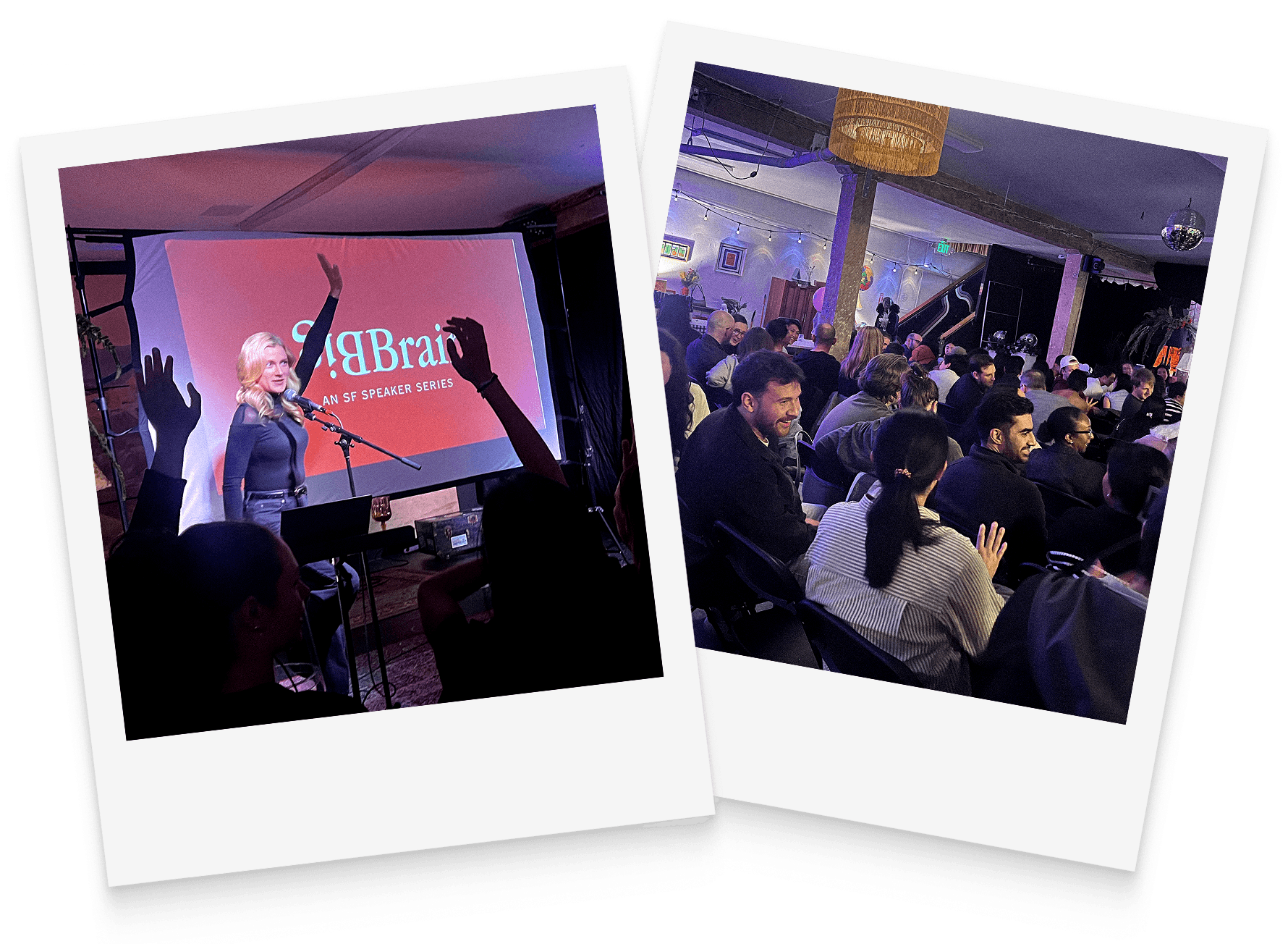
A bar makes the talk public, and the speaker reachable
Academic spaces aren't that accessible to the public. They’re expensive. You often have to be in a program. You don’t necessarily hear about events at universities, and they can be far. If she wants to go to a talk at UC Berkeley from San Francisco, that’s an hour drive.
“I care about making public talks more accessible and more well known.”
The casual room does the rest. When you see a professor in a class, you think of them as a king or queen. You put them on a pedestal. At Big Brain you’re still putting the speaker on a pedestal in some way (they’re standing on a stage, they’re the one talking), but the room is so much more casual. Someone asks a question during the Q&A and suddenly they’re just having a conversation with the speaker.
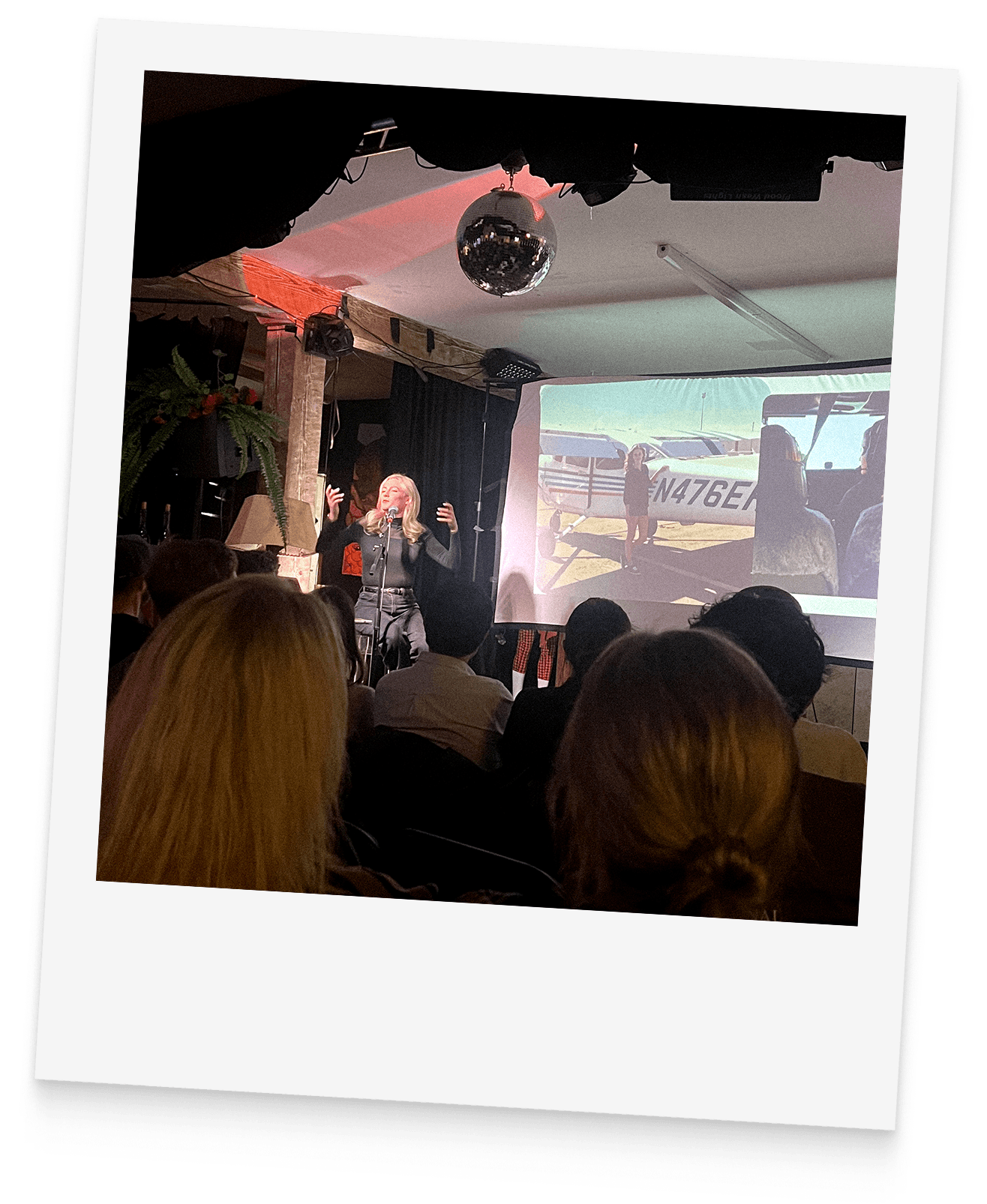
Emily also loves a beautiful space. You walk in and you’re like, whoa, this is so cool. Instead of taking shots or dancing at a nightclub, you’re listening to something you’re really interested in. The juxtaposition of a really academic, smart thing in a really fun place makes the night feel exciting and different.
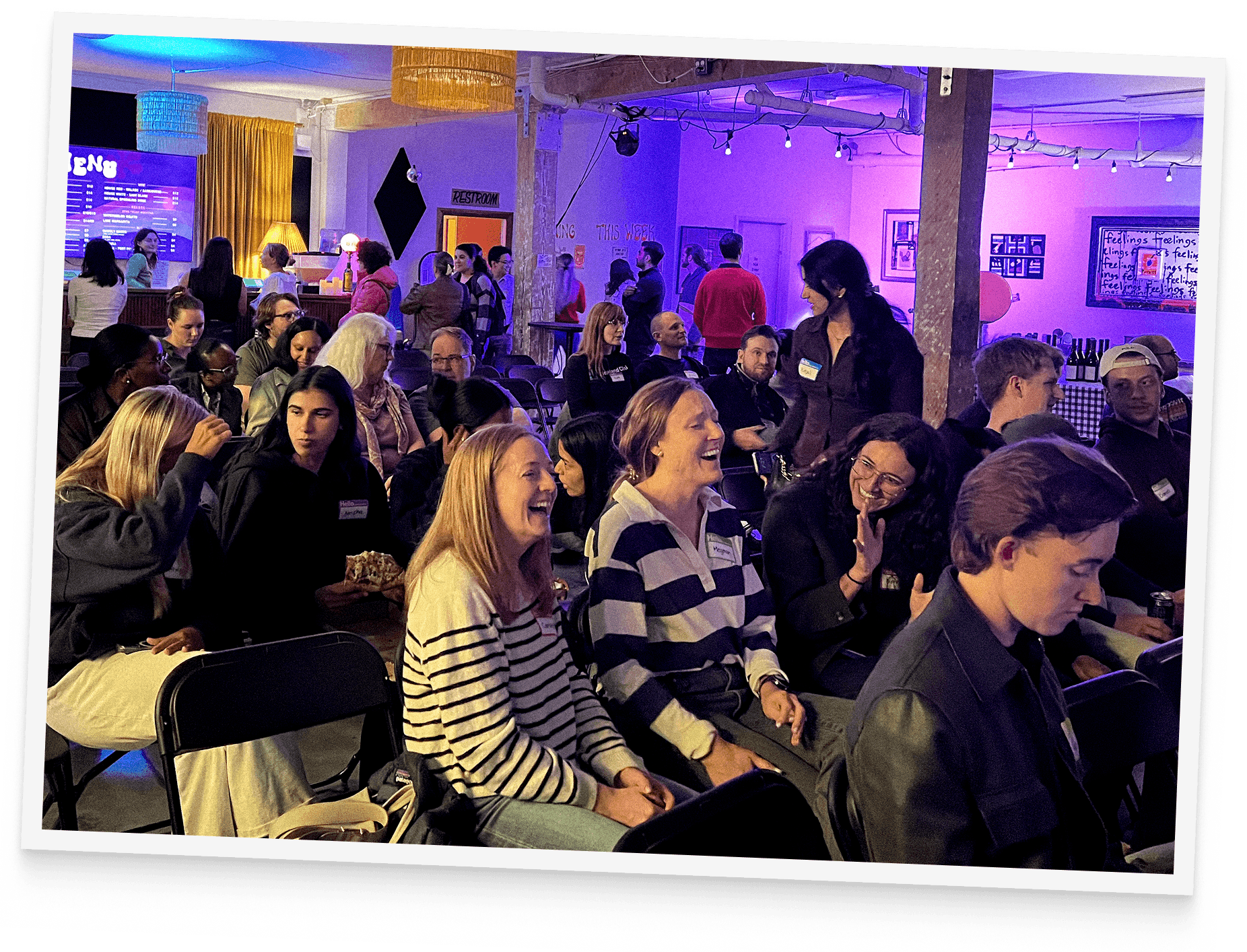
Speaker first, then the room, then a cloned Luma page
There are three main parts to planning a night.
The first is finding a speaker. The team does a lot of its own research and outreach. They also accept applications. They have at least one call with every speaker. Depending on track record, sometimes they’ll do an audition where the person has to present to them. Other times the speaker is already credible enough that they skip that step, which saves time. Then there’s a lot of email going back and forth: please send your lecture materials, please send your availability.
The second part is the venue. This is a little easier now because they work with over 15 venues across San Francisco, Oakland, Berkeley, and San Jose. Matching still takes real attention. Emily thinks about the topic and the demand. She thinks about the vibe: an artistic lecture should be in a beautiful, artistic space; an interactive one should be in something cozy. She thinks about capacity. They want to fit as many people as they can, but they also want the room to feel socially comfortable, so it doesn’t read like the speaker is famous and standing on a stage you can’t reach.
Once everyone’s availability is matched to the right venue, she clones the event setup in Luma and adds the title, the description, and the image. Right now a lot of this is manual. She’s working on building a system that uses the Luma API to automate more of it.
After that, marketing and graphics, and they’re done. The events stay simple on purpose. Emily personally can’t be at every single one, so the team has to be able to show up after their jobs and run them. As long as the space has good seating, projection, and a microphone, that’s really all they need.
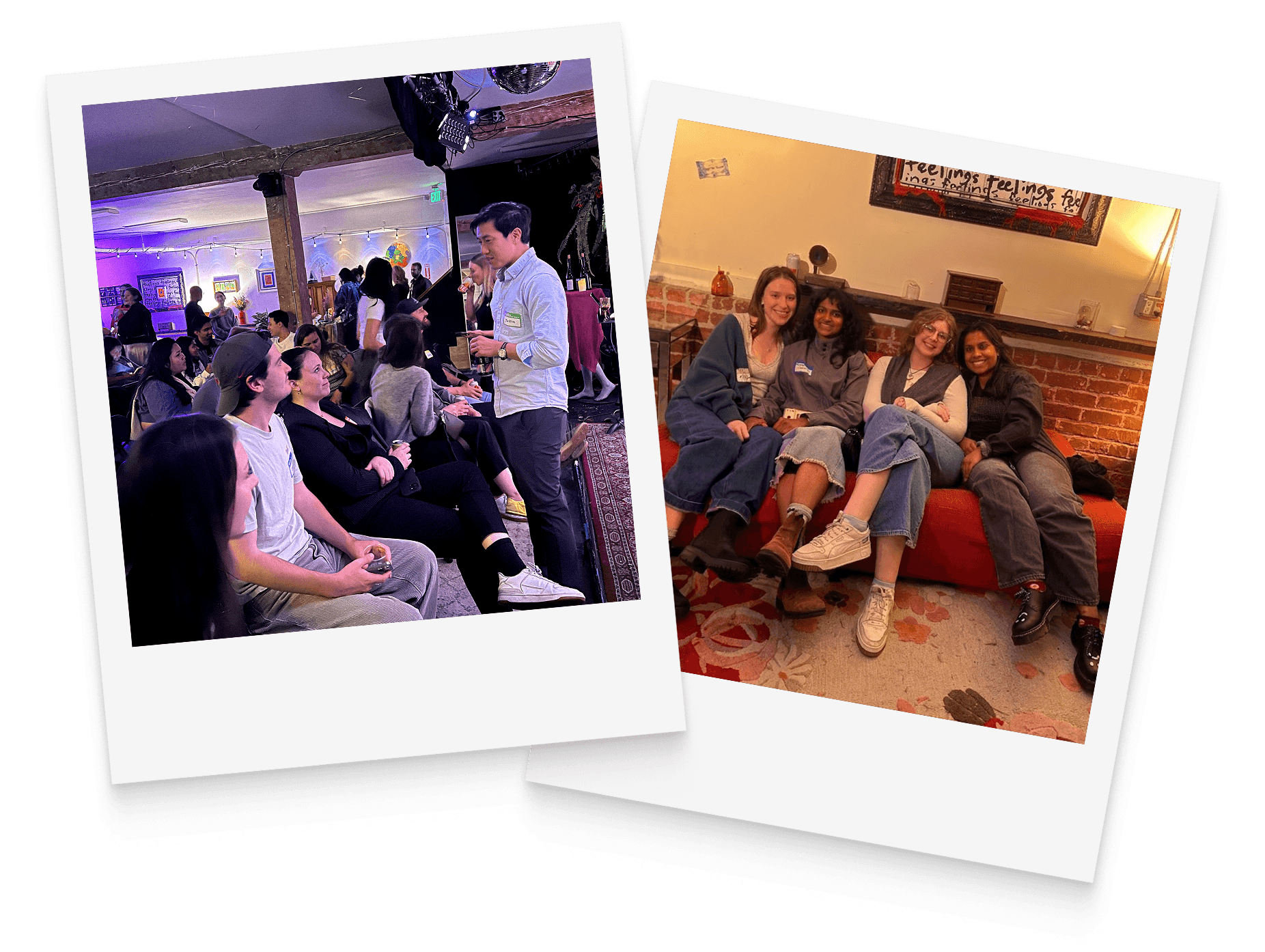
Ten nights a month only work if she misses some
It’s really hard to let go. You have to find people you trust, build a process that’s consistent, and train them on it. For Emily, balance still has to hold.
“I started Big Brain to improve my life. Work-life balance matters to me as much as I can keep it.”
Even when she can’t be at an event, she still gets FOMO. These are literally lectures she picked. She’ll hear from other people that one was so good and she wasn’t there and feel that pull. Trying to be at every single one wouldn’t be sustainable, and she thinks any community builder gets to a point where they have to make peace with that.
Five or ten dollars first
The first event was super cheap, like five or ten dollars. That was her setting a price point a little randomly. She asked herself what she’d be willing to pay if she were a random person walking in. She’d looked at events similar to hers that cost $50 and thought, I would never pay that, that’s crazy.
She also pays every venue, so she had to figure out the math. One of the first community spaces she worked with charged her 30% of ticket sales, and the more she talked to other venues, the more she realized that’s basically the standard in San Francisco. From there, you back into your other expenses and figure out how much to pay yourself.
They recently raised prices from $25 to $27 so they could pay speakers fairly without substantially raising the cost for attendees. They’re still making close to what they were before, maybe a little less, but now they’re able to thank the people who make these lectures possible.
“My advice for anyone pricing their events is to think about both sides: what would you be willing to pay for this, and what do your expenses actually require?”
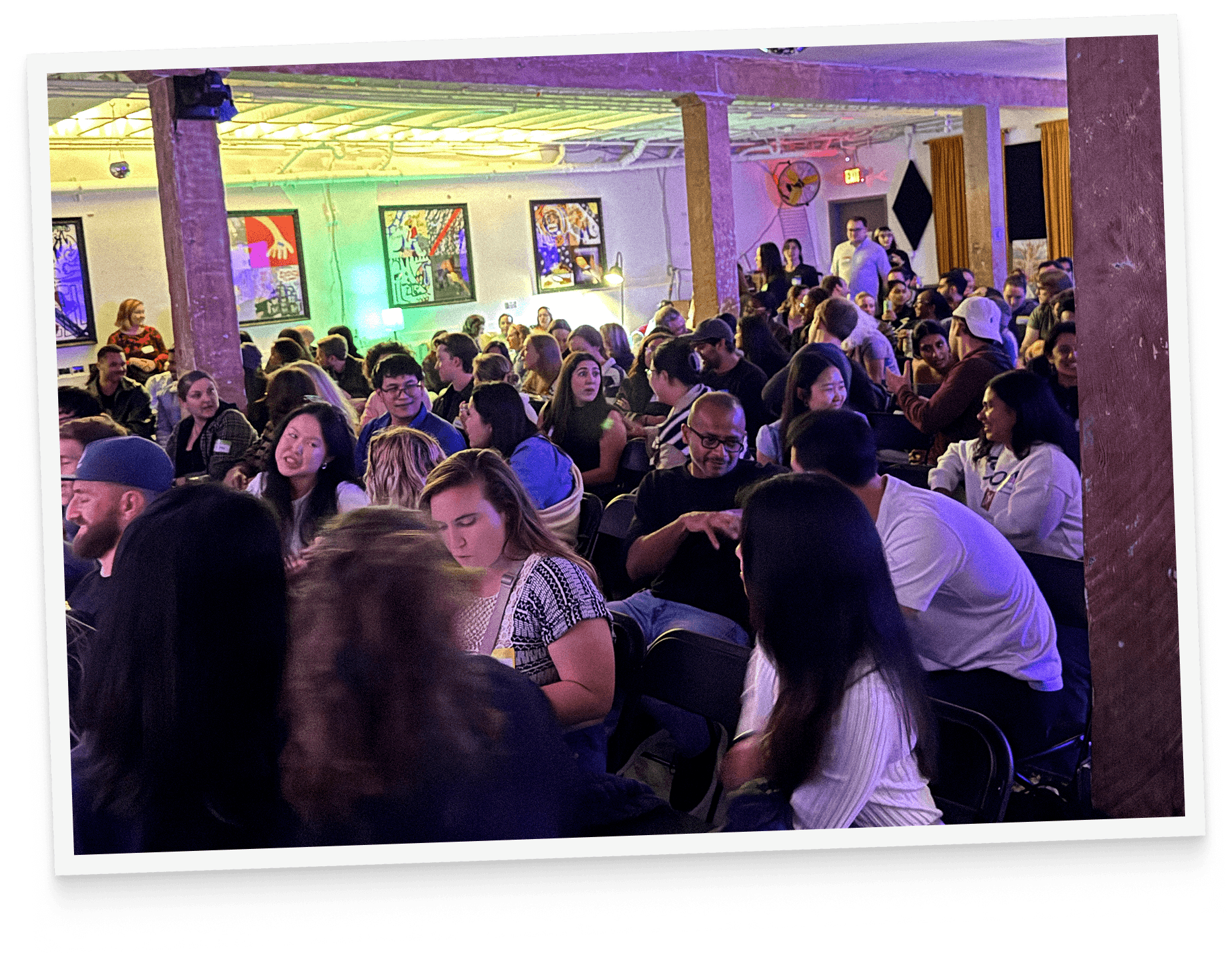
It makes her so sad when a lecture is sold out and people email asking for a ticket she just can’t fit in the space. When someone lands on the Luma calendar and sees that everything is sold out, including the lecture they wanted to go to, there’s a level of psychological exclusivity to it. They think, whoa, these are super popular, I really need to be on top of the next one. It makes people crave it.
The nights stay good if the organizer gets paid
Emily believes you can do amazing things in life, help your community, improve the world, and get paid for it. A lot of people in community spaces hear “why should I pay for this?” from the public, as if you could just invite a friend and they could give a talk to your crowd. She hears that as skipping the labor. It’s so much work to organize stuff like this. The people who organize deserve to be paid.
That’s what feels best about the work: she’s improving San Francisco, she’s supporting the venues and the people in them, she’s having a fun time, and she can do this for a living. She’s so thankful.